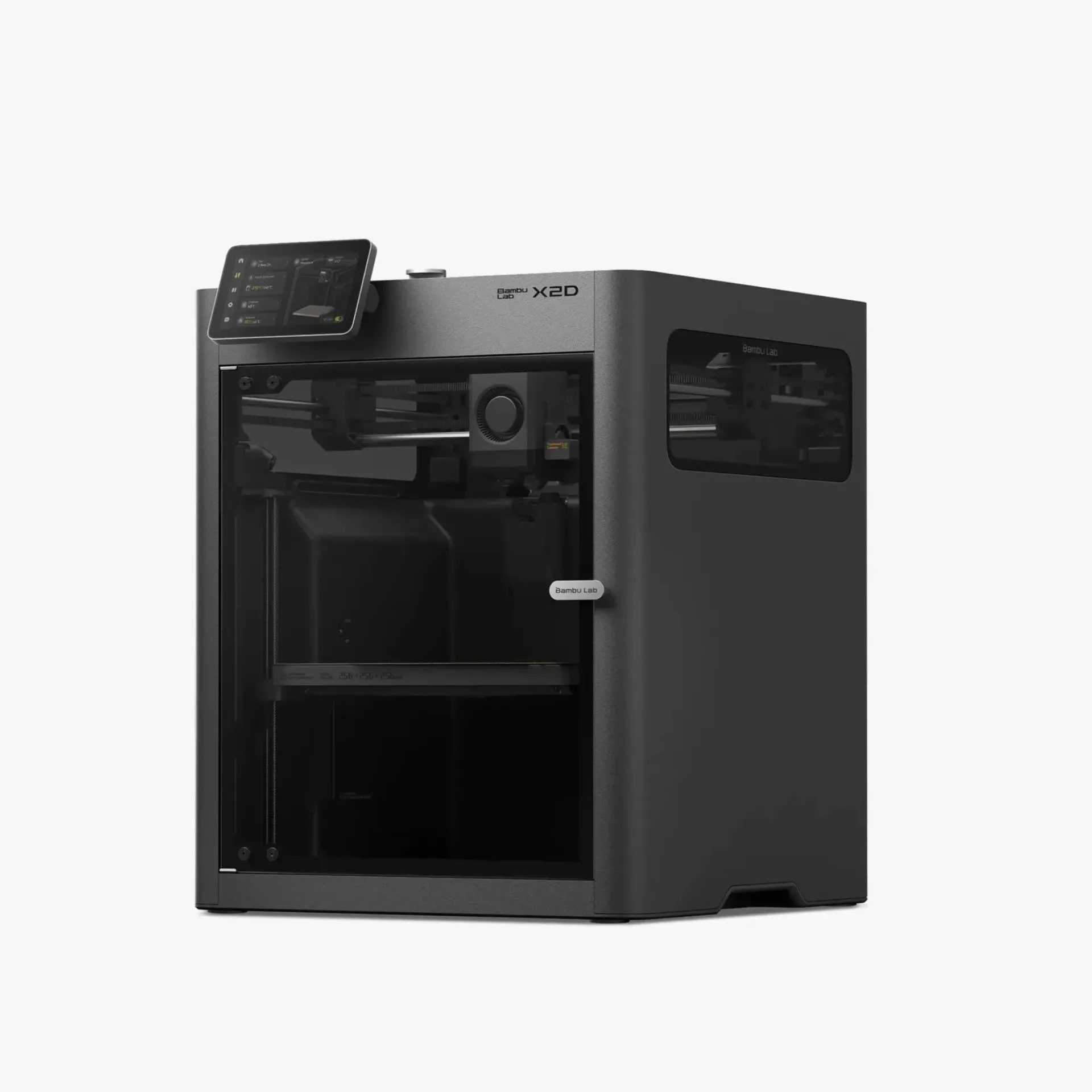
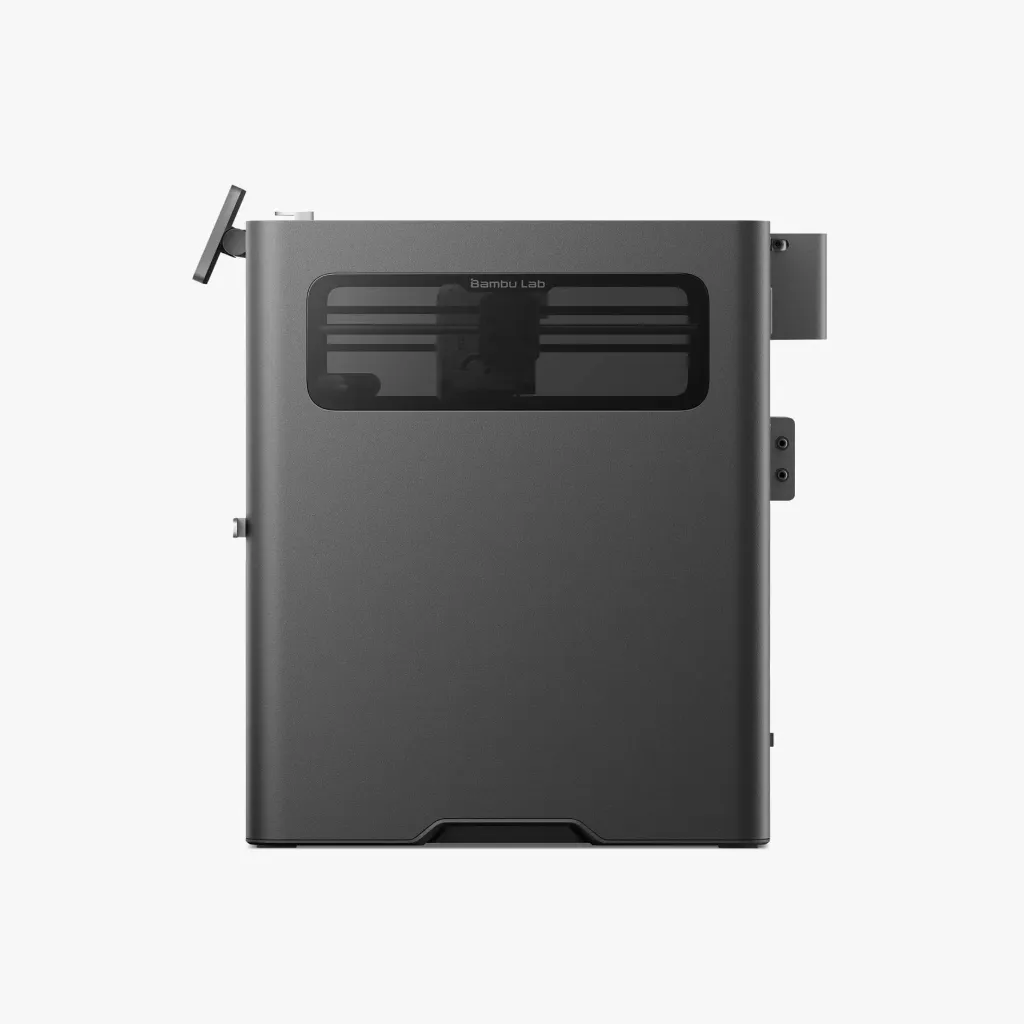
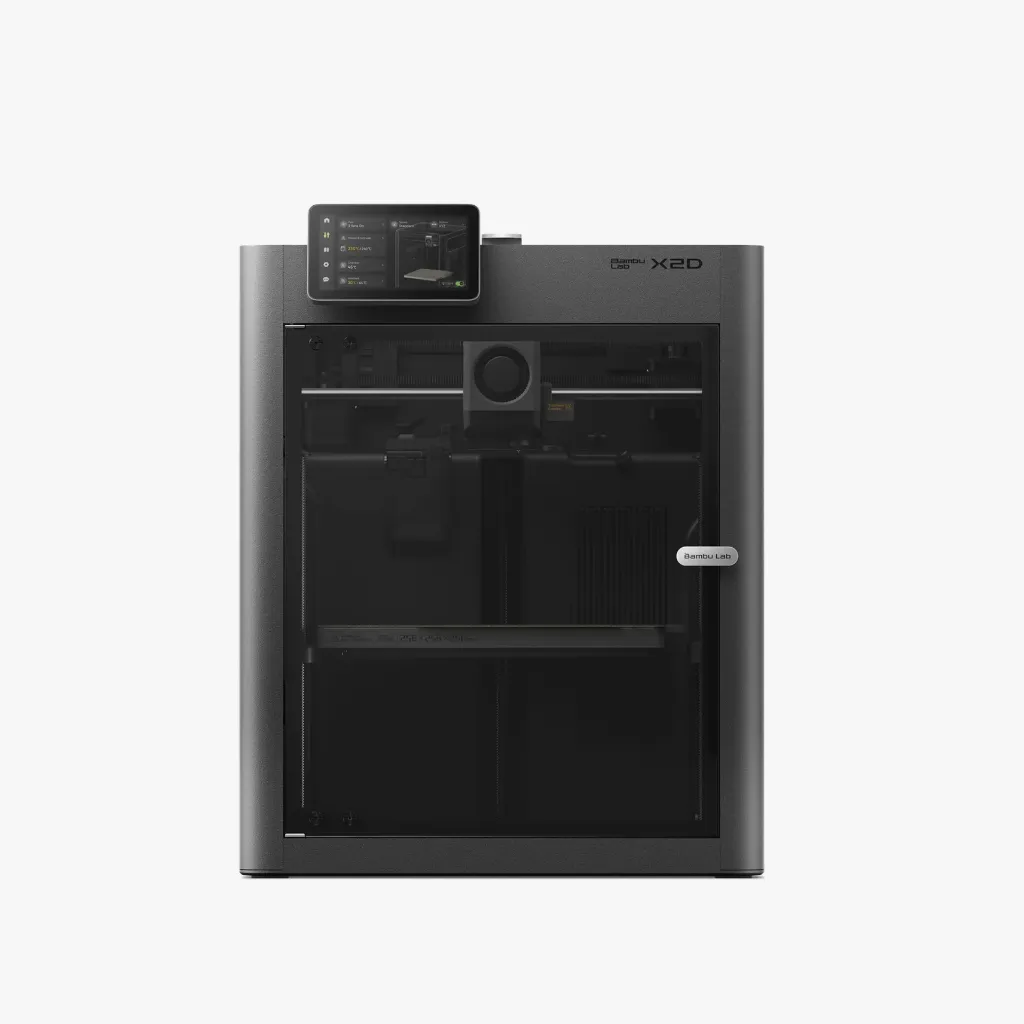
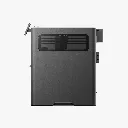
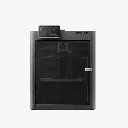
Bambu Lab X2D | Affordable Dual-Nozzle 3D Printer
Dual-Nozzle 3D Printing
Faster Multi-Colour Printing & Cleaner Support Removal
300 °C Nozzle & 65 °C Active Chamber Heating
Closed-Loop Servo Motor Extruder
Full Filament Path AI Detection
256 × 256 × 260 mm³ Print Volume
Voltage Range: 100-120V (China Taiwan)
Voltage Range: 200-240V (Singapore/Thailand/Malaysia/Hong Kong/ Macau)
To connect more than two AMS (including AMS 2 Pro, AMS HT), a 4-in-1 PTFE Adapter (FAZ013-N) is needed

Dual-Nozzle System | Stop worrying about how to get support - easily peel it off.
The main nozzle is responsible for printing parts, while the auxiliary nozzle is responsible for support structures.
X2D hands over all the tedious support work to the auxiliary nozzle, using its own material.
It can provide complete support for steep overhangs, fabric folds, and internal channels, and then peel off easily.

Add more colour, more detail, and more fun.
Combine PLA and TPU in one model. The resulting bags, handles, and bumpers can be directly removed from the print platform for use.
Instant switching of dual nozzles. Enjoy faster colour changes, smoother transitions, and less waste.
Finer. Sharper. True to design.
Tap, switch, complete.
Unlike traditional motor-driven systems, the X2D integrates gears and trigger mechanisms into the tool head. The nozzle replacement rod lightly touches the plate arm, driving the internal gear set to change the nozzle. No extra weight is added, making the changeover easy.
A lighter tool head means less inertia and vibration. Even at full speed, the surface remains flawless - right to the top.
Rapid cooling. While gravity has not yet taken effect.
Dual air inlets are always better than a single air inlet. The freshly extruded material is soft, but the dual air inlets on both sides of the X2D printer can instantly blow cold air into the print chamber. This continuous air exchange stabilises each layer, especially suitable for low-temperature materials like PLA.
Just being hot is not enough; it needs to be evenly heated.
The X2D uses a 300°C nozzle and a 65°C active heating chamber, sufficient to meet the needs of most engineering materials. The active heating chamber ensures uniform heat conduction, ensuring a strong bond between layers.
Calibration is adjusted based on wear and material changes.
Bambu Lab's Flow Dynamics Calibration establishes a nonlinear model that changes over time, detecting and compensating for the effects of nozzle wear or material moisture.
PMSM servo system: smoother surfaces start from within the extruder.
Bambu Lab's unique PMSM servo system samples at a frequency of 20 kHz, dynamically adjusting torque to eliminate small fluctuations before they reach the surface.
The surface is smooth and delicate.
Compensation makes the edges sharp and the details clear.
The AI camera monitors for you at all times.
Before printing, the AI's real-time preview camera and tool head camera will scan the platform; during the process, it monitors issues such as tangling and nozzle clogging.
Fully equipped sensors cover every critical stage.
The entire system consists of 31 sensors, monitoring the feed path, printing process, thermal environment, and machine safety in real-time.
Fresh air, consistently.
Three-stage filtration system: G3 pre-filter, H12 HEPA filter, and coconut shell activated carbon layer, effectively reducing odours and particulates.
Suitable for placement in the living room.
No tools are needed to change the nozzle.
Quiet enough for night-time printing.
View every detail remotely.
One million switches, still smooth.
A 3D printer that can automatically update like a mobile phone.

Finished product variation notification
Depending on the batch, the nozzle switching area may or may not include a silicone wiper, with performance achieved through software being completely identical.
Frequently asked questions
What are the main differences between the X2D and X1C?
The X2D is a brand new chapter of the X1C. It introduces a dual nozzle system, supporting up to 25 colour printing;
equipped with an active heating chamber (maximum temperature 65°C) for processing engineering materials;
featuring a servo extruder with real-time flow sensing and material tangling detection capabilities;
expanded AI monitoring features, supporting real-time viewing and tool head cameras;
and supports motion calibration based on visual encoders. The X2D improves and further enhances all the advantages of the X1C.
What is the maximum printing speed and acceleration of the X2D?
When printing with the main nozzle, the maximum movement speed is 1000 mm/s, and the maximum acceleration is 20,000 mm/s².
Are the hot ends on both sides the same?
Yes, the left and right hot ends are completely identical in structure and components, and can be interchanged between the left and right positions.
What is the function of the chamber exhaust fan on the back panel of the X2D?
It actively extracts air from the printing chamber. In cooling mode (for PLA and other low-temperature materials), it works with the adaptive airflow system to dissipate heat and expel smoke. After printing with high-temperature materials, enable the 'purify air at the end of printing' function to clear residual smoke.
How many AMS units can the X2D connect to at most?
Single hot end:Supports up to 4 AMS 2 Pro and 8 AMS HT units (a total of 12 units, 24 slots).
Dual hot end:When used with the maximum AMS configuration, up to 25 colours can be printed.
Does the X2D support high flow nozzles?
Yes. The high flow hotend significantly increases printing speed while maintaining print quality, reducing print time by up to 30% compared to standard nozzles.
| Item | Specifications |
|---|---|
| Printing Technology | Fused Deposition Modelling |
| Build Volume (W*D*H) | Main nozzle print size: 256*256*260 mm³ Auxiliary nozzle print size: 235.5*256*256 mm³ Dual nozzle print size: 235.5*256*256 mm³ Total volume of dual nozzles: 256*256*260 mm³ |
| Enclosure | Plastic and steel |
| Frame | Plastic, glass, and metal |
| Physical Dimensions | 392*406*478 mm³ |
| Net Weight | 16.25 kg |
| Main extruder gear | Hardened steel |
| Main extruder motor | Bambu Lab high precision permanent magnet synchronous motor |
| Auxiliary extruder gear | Hardened steel |
| Auxiliary extruder motor | Stepper motor |
| Nozzle | Hardened steel |
| Maximum nozzle temperature | 300℃ |
| Included nozzle diameter | 0.4 mm |
| Supported nozzle diameters | 0.2 mm, 0.4 mm, 0.6 mm, 0.8 mm |
| Filament cutter | Built-in |
| Filament diameter | 1.75 mm |
| Supported build platform types | Textured PEI sheet, smooth PEI sheet, ultra-sticky cooling sheet, engineering sheet |
| Maximum heated bed temperature | 120℃ |
| Maximum tool head speed | 1000 mm/s |
| Maximum tool head acceleration | 20,000 mm/s² |
| Maximum flow rate of hotend (standard flow hotend) | 40 mm³/s (test parameters: single-layer outer wall circular model with a diameter of 250 mm; Bambu Lab ABS material; print temperature 280 °C) |
| Maximum flow rate of hotend (optional high flow hotend) | 65 mm³/s (test parameters: single-layer outer wall circular model with a diameter of 250 mm; Bambu Lab ABS material; print temperature 280 °C) |
| Active chamber heating | Supported |
| Maximum temperature | 65°C |
| Pre-filter grade | G3 |
| HEPA filter grade | H12 |
| Activated carbon filter type | Coconut shell powder |
| VOC filtration | Supported |
| Particulate filtration | Supported |
| Component cooling fan | Closed-loop control |
| Hot end cooling fan | Closed-loop control |
| Main control board fan | Closed-loop control |
| Chamber exhaust fan | Closed-loop control |
| Chamber heat circulation fan | Closed-loop control |
| Auxiliary component cooling fan | Closed-loop control |
| Main hot end filament support | PLA, PETG, ABS, ASA, TPU; supports PLA, PLA/PETG, ABS, PA/PET, PET, PA, PC, PVA; carbon fibre/glass fibre reinforced PLA, PETG, ABS, ASA, PA6, PAHT, PPA, PET |
| Auxiliary hot end filament support | PLA (excluding PLA Aero), PETG, ABS, ASA, TPU (suitable for AMS), supports PLA, supports PLA/PETG, supports ABS, supports PA/PET, PET, PA, PC, PVA; carbon fibre/glass fibre reinforced PLA, PETG, ABS, ASA, PA6, PAHT, PET |
| Auxiliary hot end (please print with caution¹) | PLA Silk, PETG-CF, ASA-CF, PA6-CF, TPU (suitable for AMS), PA/PET support |
| Instant camera | Built-in; 1920*1080 |
| Tool head camera | Built-in; 1600*1200 |
| Door sensor | Supported |
| Filament run-out sensor | Supported |
| Filament winding sensor | Supported |
| Filament mileage counter | Supported by AMS |
| Power recovery | Supported |
| Voltage | High voltage version: 200-240 VAC, 50/60 Hz; low voltage version: 100-120 VAC, 50/60 Hz |
| Maximum power³ | High voltage version: 1600W@220V; low voltage version: 1100W@110V |
| Steady-state power | High voltage version: PLA (25℃): 250W@220V; PC (25℃): 550W@220V Low voltage version: PLA (25℃): 250W@110V; PC (25°C): 550W@110V |
| Operating temperature | 10℃-30℃ |
| Electronic touch screen | 5 inch 1280*720 touch screen |
| Storage | Built-in 8GB EMMC and USB port |
| Control interface | Touch screen, mobile app, PC app |
| Motion controller | Dual-core Cortex-M4 and single-core Cortex-M7 |
| Application processor | Quad-core ARM processor with dedicated NPU |
| Slicing software | Bamboo Studio |
| Third-party slicing software | Third-party slicing software that supports exporting standard G-code, such as Super Slicer, PrusaSlicer, and Cura, but some advanced features may not be supported. |
| Supported operating systems | MacOS, Windows, Linux |
| Ethernet | Not available |
| Wireless network | Dual-band Wi-Fi |
| Network termination switch | Not available |
| Removable network module | Not available |
| 802.1X network access control | Not available |
| Wireless internet operating frequencies | 2412 - 2472 MHz, 5150 - 5850 MHz (FCC/CE); 2400 - 2483.5 MHz, 5150 - 5850 MHz (SRRC) |
| Wi-Fi transmitter power (EIRP) | 2.4 GHz: <23 dBm (FCC); <20 dBm (CE/SRRC/MIC) 5 GHz Band 1/2: <23 dBm (FCC/CE/SRRC/MIC) 5 GHz Band 3: <30 dBm (CE); <24 dBm (FCC) 5 GHz Band 4: <23 dBm (FCC/SRRC); <14 dBm (CE) |
| Wireless local area network protocol | IEEE 802.11 a/b/g/n |
1) For optimal print quality, please use the main hotend to print these materials.
2) The voltage specifications of the printer vary by sales region. Before use, please check the label next to the printer's power socket to ensure the supply voltage matches the voltage indicated on the label.
3) To ensure the heated bed reaches the desired temperature quickly, the printer will operate at maximum power for about 3-5 minutes.