High-Precision Jewelry-Grade 3D Scanning
Capturing micron-level detail — revealing the true beauty of craftsmanship.
Contact Us
High-Precision Jewelry-Grade 3D Scanning
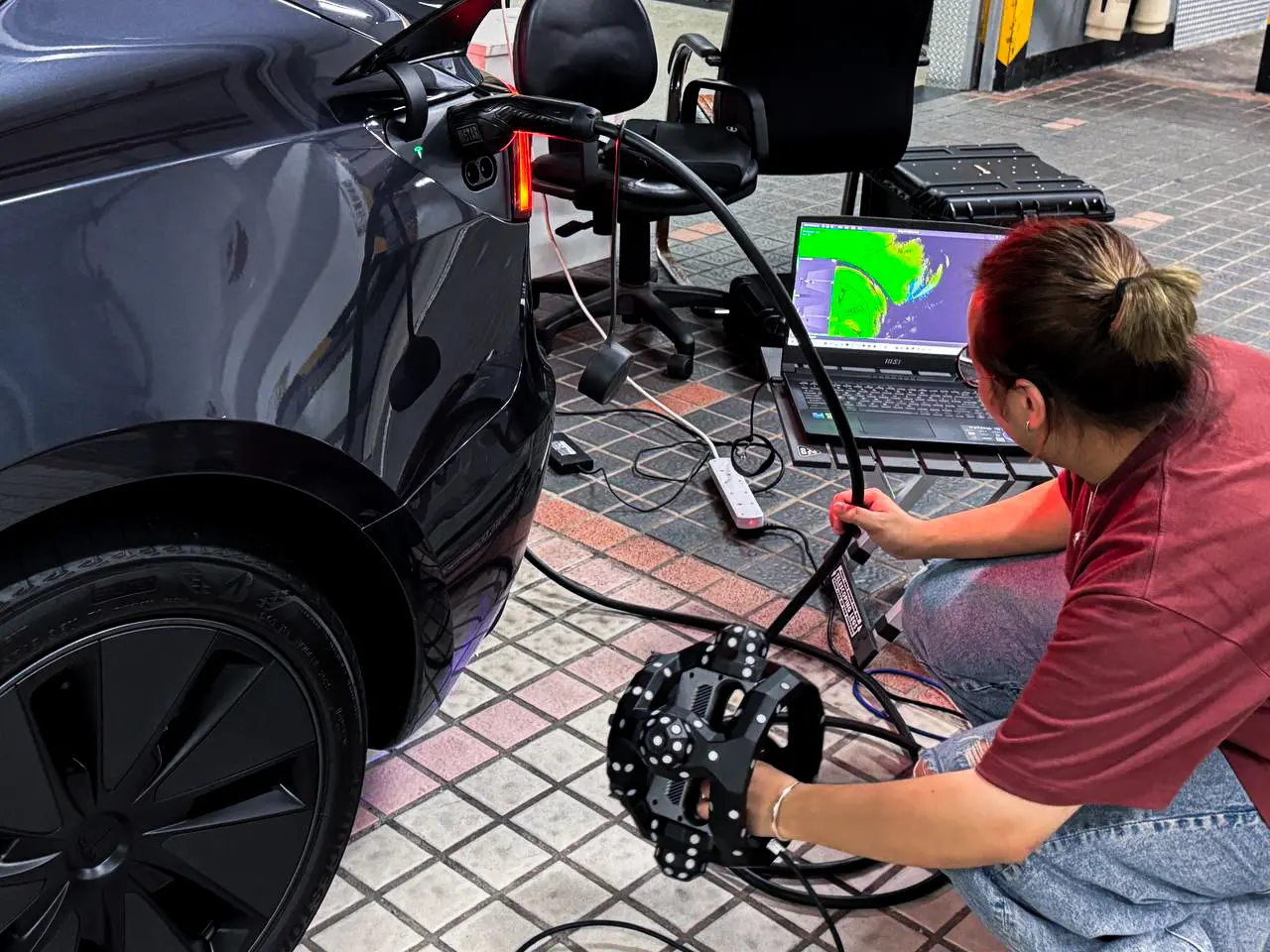
Our high-precision 3D scanning service delivers exceptional accuracy and resolution, enabling significant improvements in design efficiency, production speed, and product quality. From toy figures and engineering development to the jewelry industry, our advanced scanning solutions help clients gain a competitive edge through enhanced productivity and precision.
Mr Bean 頭雕
過往案例
互動式超精細珠寶級 3D 模型作品集
一毫硬幣
豹頭戒指
過往案例
互動式超精細珠寶級 3D 模型作品集
一毫硬幣
豹頭戒指
Frequently Asked Questions
Ultra-fine jewellery-grade 3D scanning is a high-precision digitisation technology specifically designed for small and highly detailed objects, capable of fully preserving textures, carvings, curves, and detailed structures. Suitable for: • Jewellery • Rings/Pendants • Antique ornaments • Miniature models • Precision parts • Digital preservation of collectibles
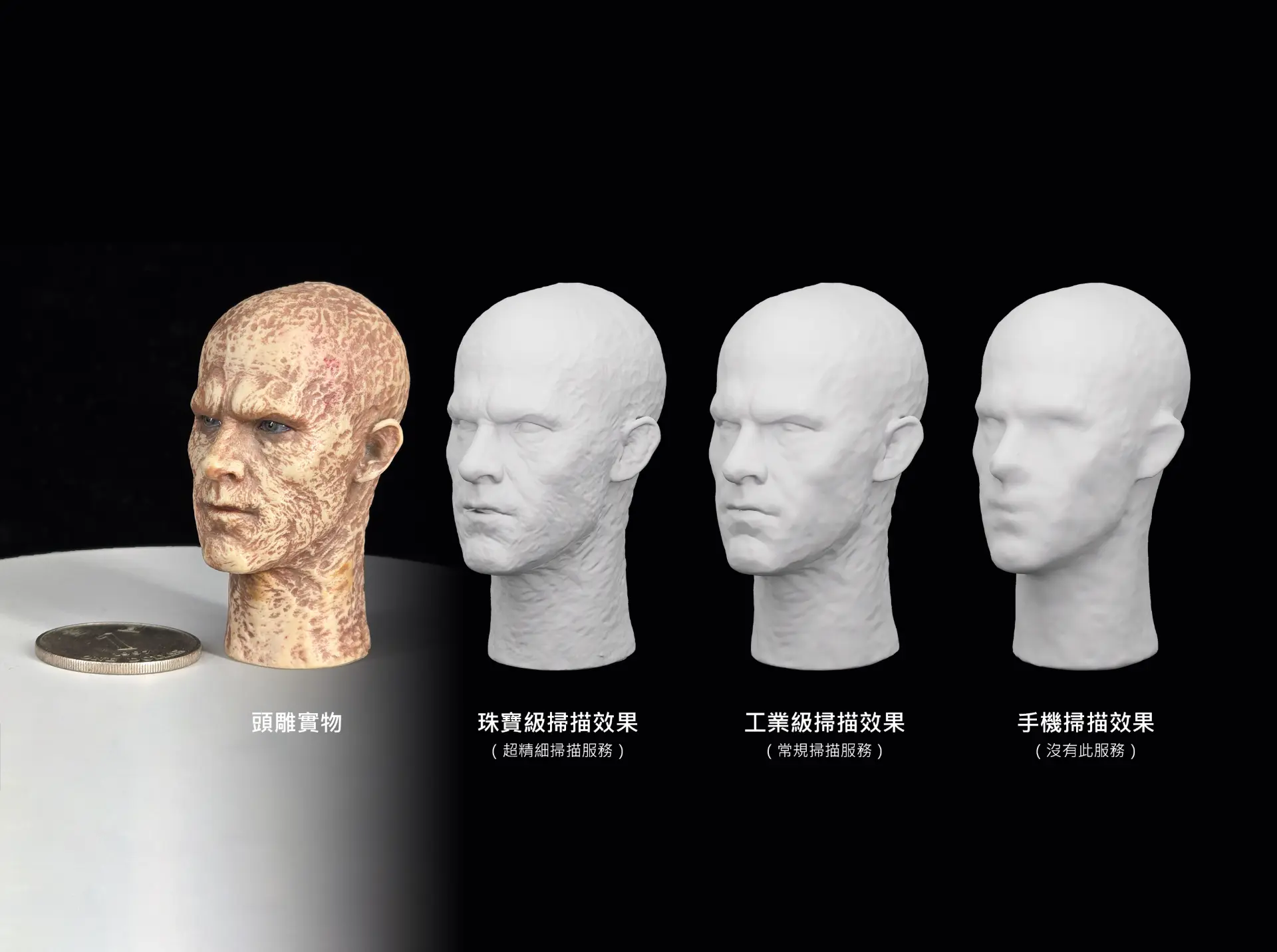
Jewellery-grade 3D scanning uses sub-pixel level non-contact phase structured light scanning technology, combined with a super high pixel optical measurement system, achieving detail accuracy of up to 0.06mm, specifically designed for handling small parts, capturing even minute details such as the numerical codes on LEGO pieces and text on Hong Kong dollars, far exceeding the accuracy of standard industrial-grade scanning.
Applicable in various precision fields, including jewellery design and replication, toy figure digitisation, engineering development, industrial inspection, quality control, and reverse engineering of precision parts, effectively enhancing design efficiency, accelerating production processes, and improving product quality.
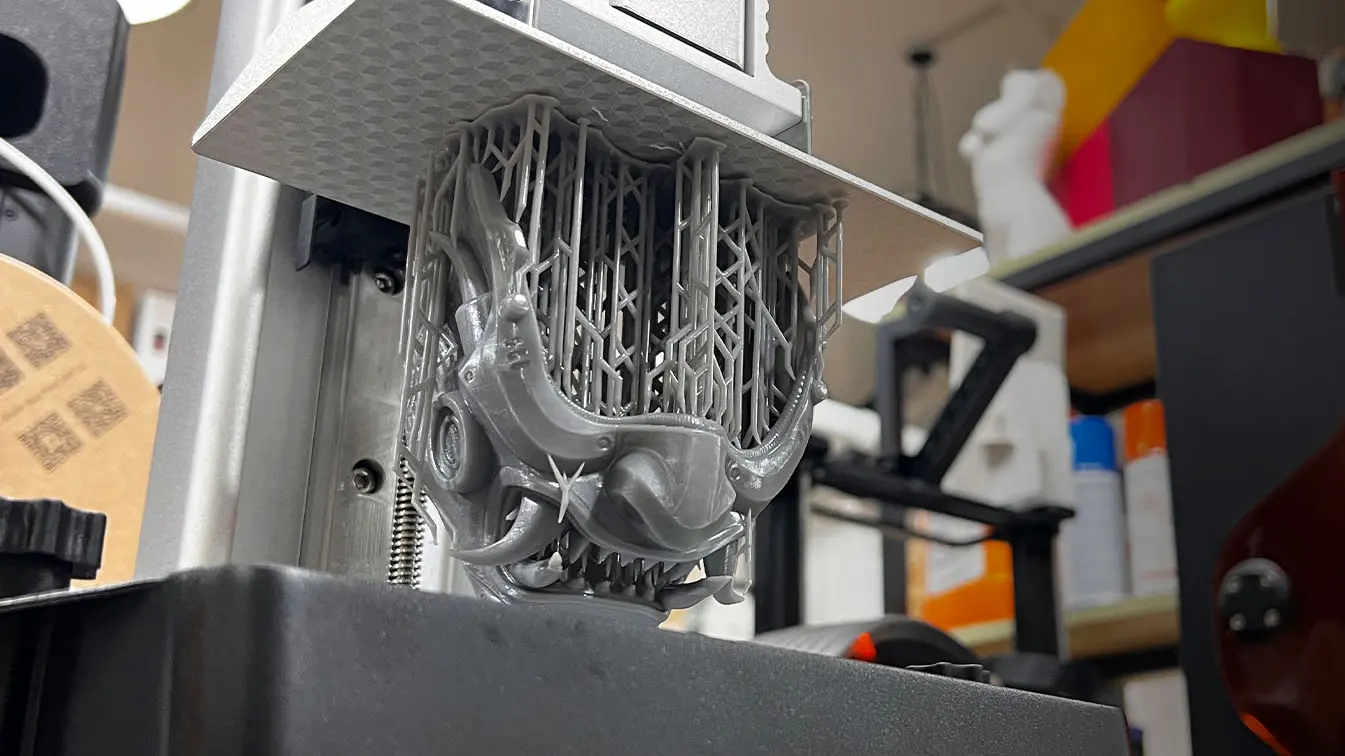
Yes. As long as the scanned object does not have issues such as black, transparent, reflective, or hole-covered surfaces, it can be directly 3D printed after adding supports, without the need for additional modifications to the file.
The system resolution reaches 0.06mm, using near 4K level detail resolution, combined with high-performance hardware and powerful 3D visual algorithms, meeting the high-precision application needs of industrial inspection, quality control, and precision engineering.
Specifically designed for handling small parts: the maximum scanning range is 60mm × 60mm × 60mm, and the minimum scanning range is 1mm × 1mm × 1mm, particularly suitable for objects that require capturing extremely fine details.
Ultra-fine jewellery-grade 3D scanning solutions can achieve extremely high detail accuracy, suitable for preserving fine textures and carvings.
Actual accuracy will vary based on:
• Object size
• Surface material
• Scanning angle
• Detail depth
and may differ.
If production or moulding needs are involved, please provide the intended use for assessment.
Yes, but highly reflective metal surfaces can increase scanning difficulty.
In some cases, a professional scanning spray may be applied to improve stability and enhance detail capture. The spray can be safely removed afterward and will not cause any permanent damage to the object.
Common delivery formats include:
• STL (for 3D printing)
• OBJ (with color/texture support)
• STEP (via reverse engineering)
• GLB / USDZ (for AR and web display)
If you have specific software or workflow requirements, we can also provide compatible file formats accordingly.
Common delivery formats include:
• STL (for 3D printing)
• OBJ (with color/texture support)
• STEP (via reverse engineering)
• GLB / USDZ (for AR and web display)
If you have specific software or workflow requirements, we can also provide compatible file formats accordingly.
Specifically designed for handling small parts: the maximum scanning range is 60mm × 60mm × 60mm, and the minimum scanning range is 1mm × 1mm × 1mm, particularly suitable for objects that require capturing extremely fine details.
Customers can provide multi-angle photos of the object and actual dimensions to receive an instant quote. You can contact us via WhatsApp (+852 9450-6951) or email (info@aiostudio.hk). The more complete the information, the more accurate the quotation.