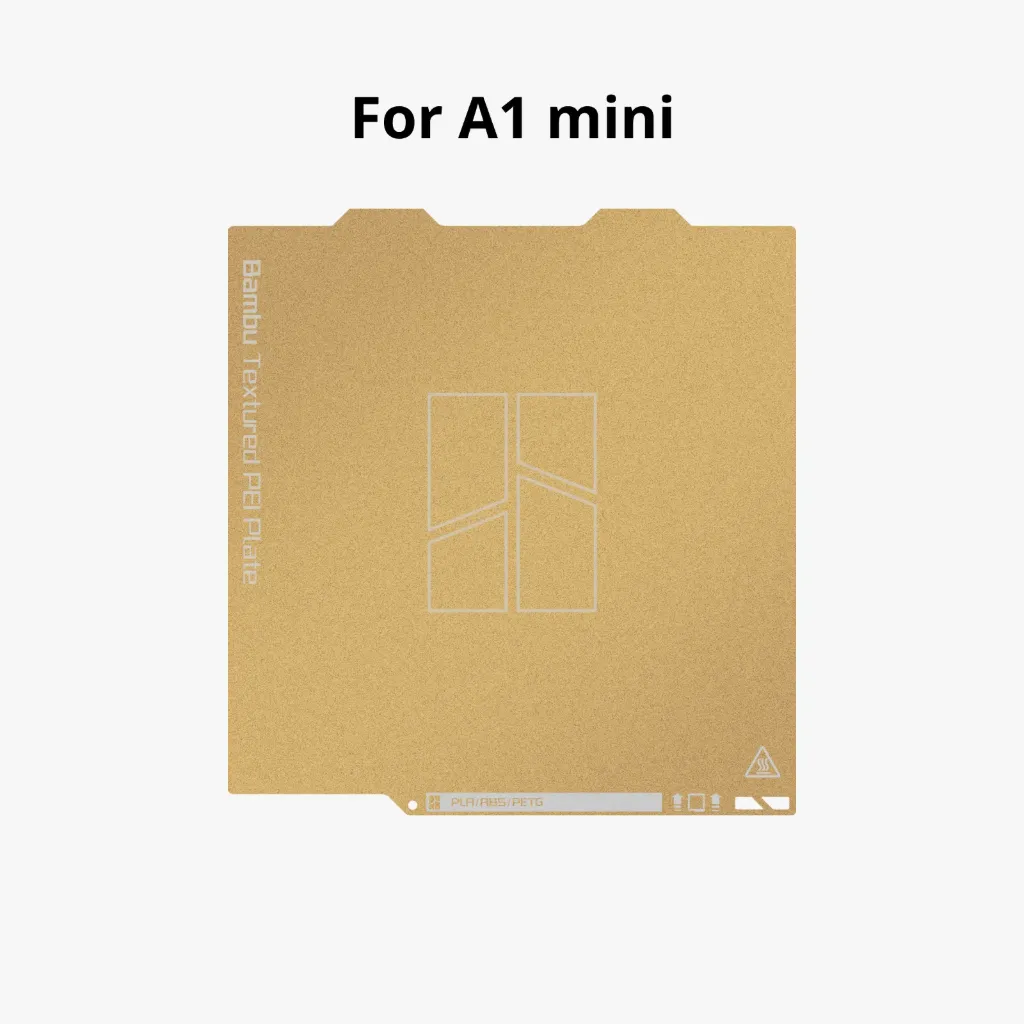
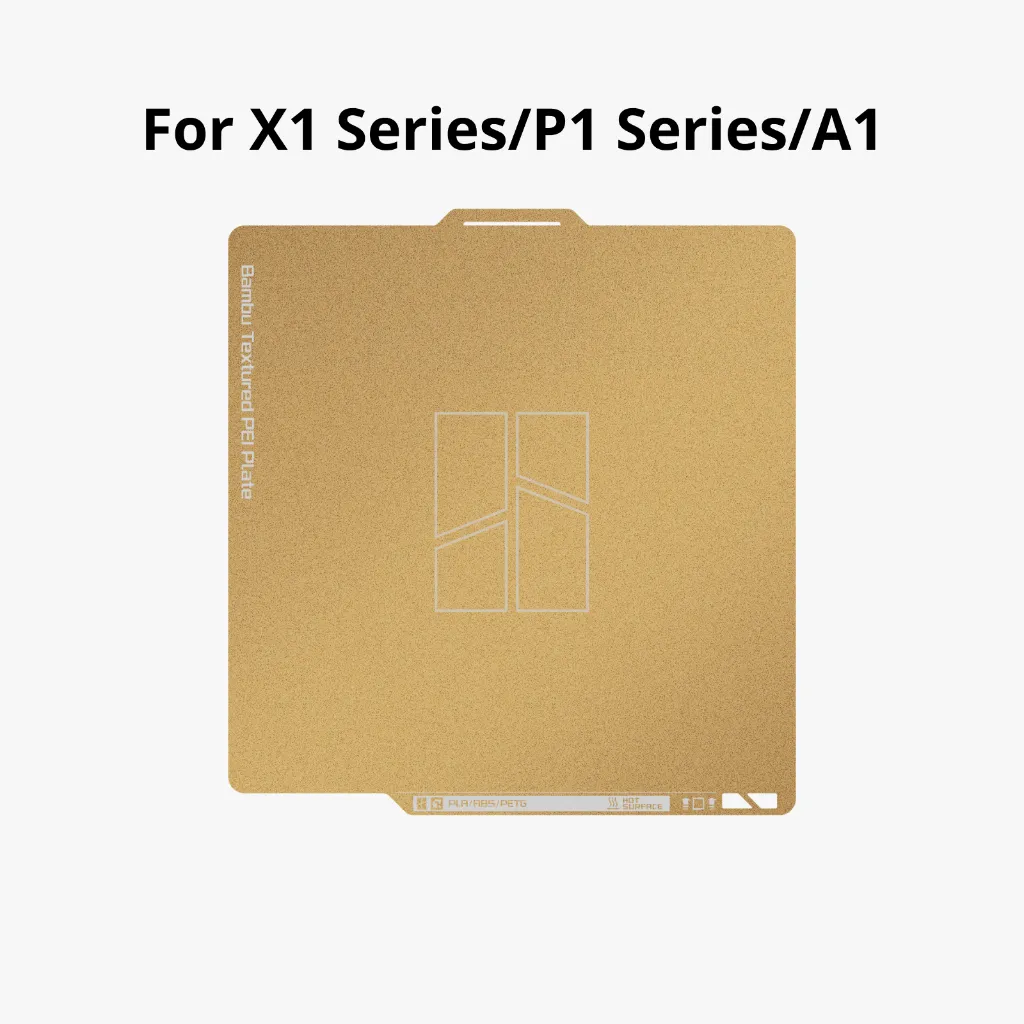
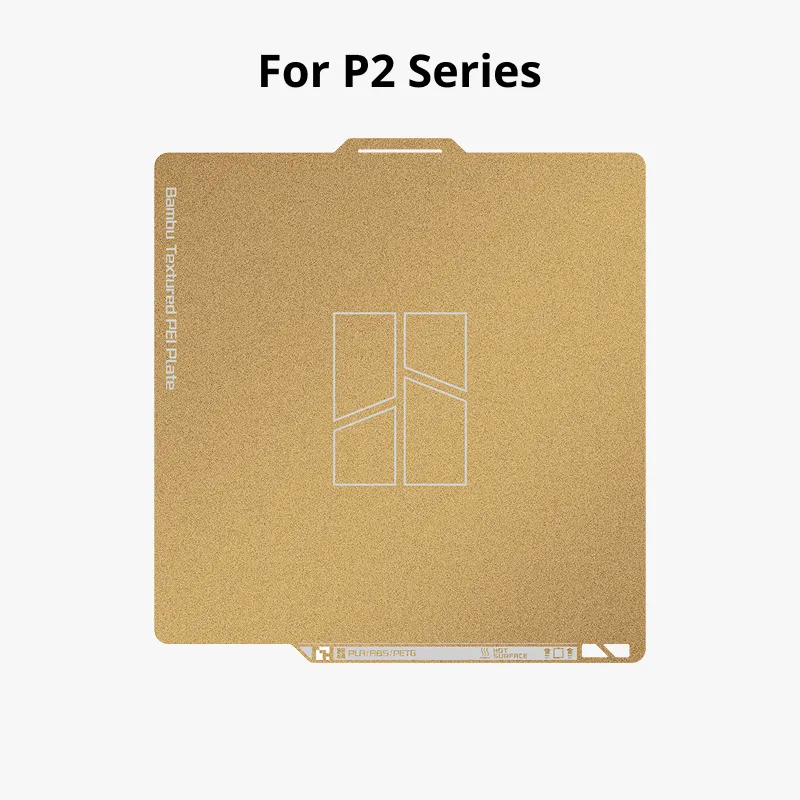
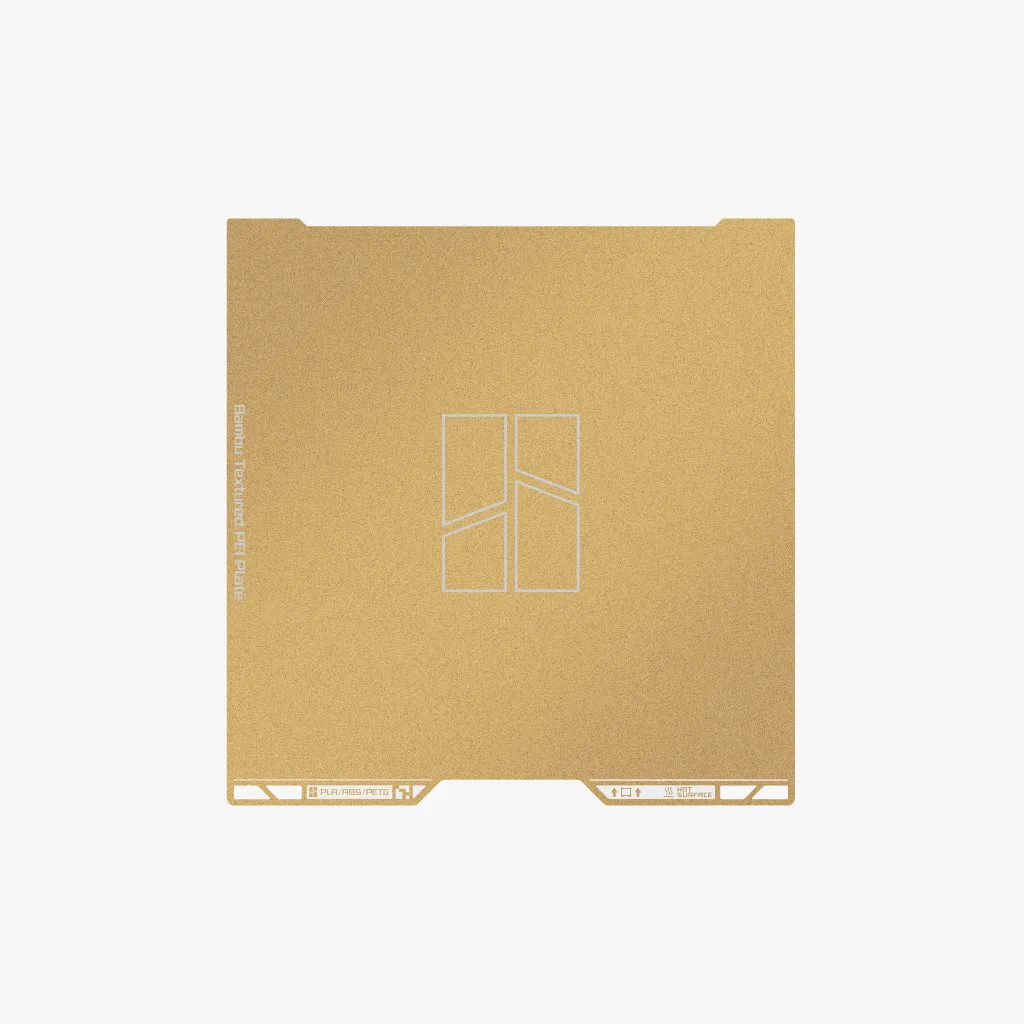
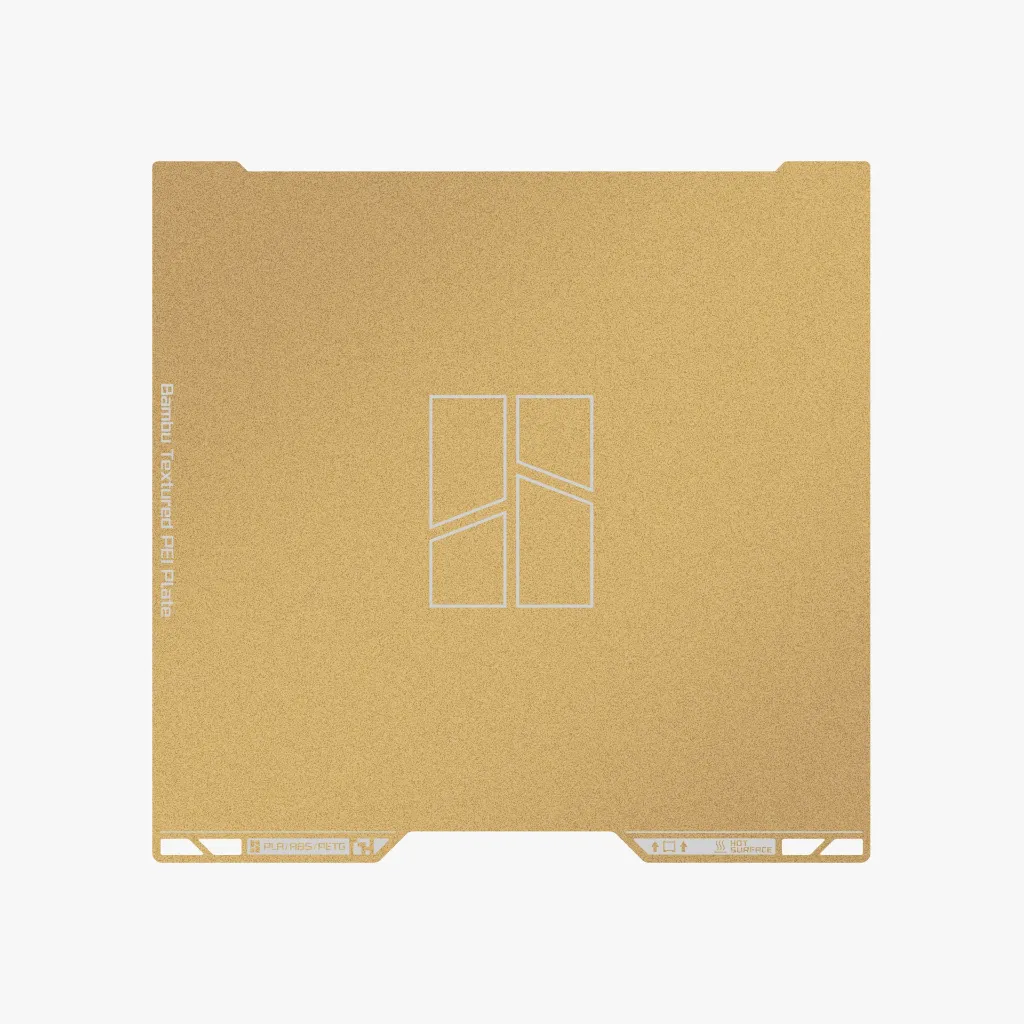
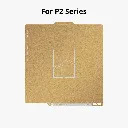
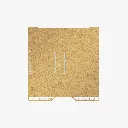
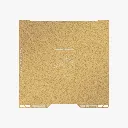
Bambu Lab Textured PEI Plate
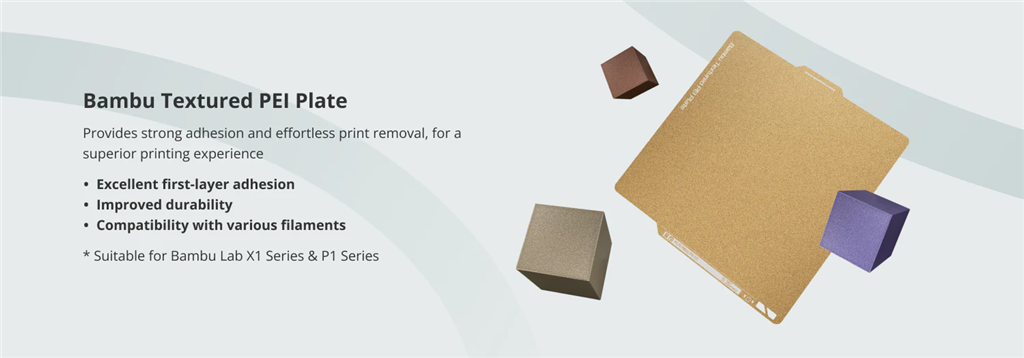
Product Features
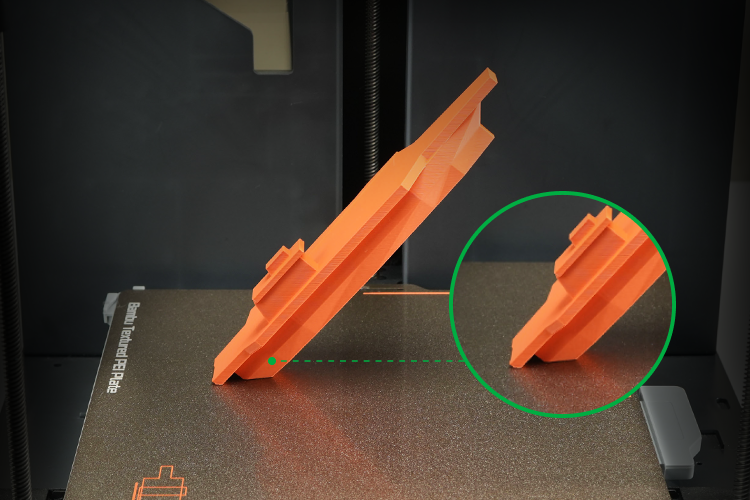
Excellent First Layer Adhesion, Enhanced Durability
After optimising the manufacturing process of the Bambu Textured PEI board, the durability of the board has been enhanced.
In addition, the adhesion between the print and the board has significantly improved, eliminating the need for adhesives.
*In certain cases, for very specific materials, glue may still be required.

Automatically Detaches After Cooling
PEI is an excellent material for 3D printing applications, as it can withstand the repeated heating and cooling cycles of the printer's heated bed.
When the temperature of the heated bed reaches room temperature, the print will easily detach; it is recommended to wait until it drops to 35℃ or lower.
If the print is still attached to the board, simply bending the steel plate will allow the model to easily fall into your hand.

Compatibility with Various Materials
PEI has excellent compatibility, allowing for printing of common materials such as PLA, TPU, and PETG,
as well as materials that require high temperatures, such as ABS and Nylon.

Reliable Magnetic Adhesion Prevents Warping
The Bambu Textured PEI board uses a 0.5mm thick stainless steel plate, enhancing magnetic adhesion.
This helps prevent warping, ensuring optimal print quality during the 3D printing process and reducing the likelihood of first layer detachment due to deformation.
It is particularly helpful when printing larger models, especially for materials that are prone to warping, such as ABS, PC, and Nylon.

Textured Surface Treatment
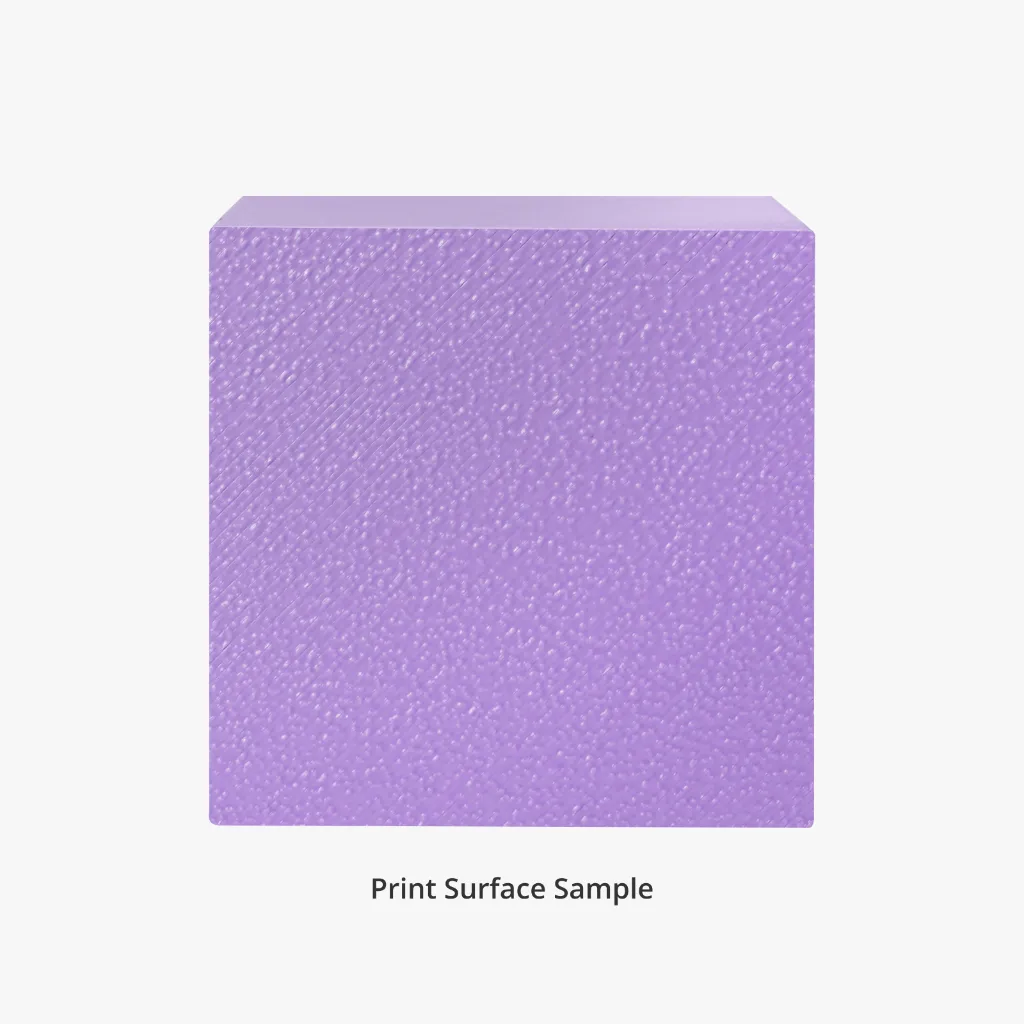
The Bambu Textured PEI board offers a unique first layer surface. By employing a powder coating process,
this PEI print board creates a rough texture that adds character to your prints.
Installation Steps - X1 and P1 Series / A1

Step 1: Align the board with the fixed points on the platform, ensuring the name of the board faces you.
_(1).png)
Step 2: Lower the height of the board and secure it to the magnetic platform.
Recommended Settings - X1 and P1 Series / A1
Please note that adjustments to other slicing software settings may be necessary depending on the model and material requirements.
Materials | Heated Bed Temperature | Is Glue Required? | Can the Glass Plate be Removed? |
PLA/PLA-CF/PLA-GF | 45~60℃ | Not Necessary | Yes |
ABS | 90~100℃ | Not Necessary | No |
PETG | 70℃ | Necessary | No |
TPU | 35℃ | Not Necessary | Yes |
ASA | 90~100℃ | Not Necessary | No |
PVA | 45~60℃ | Not Necessary | Yes |
PC/PC-CF | 100~110℃ | Necessary | No |
PA/PA-CF/PAHT-CF | 100~110℃ | Necessary | No |
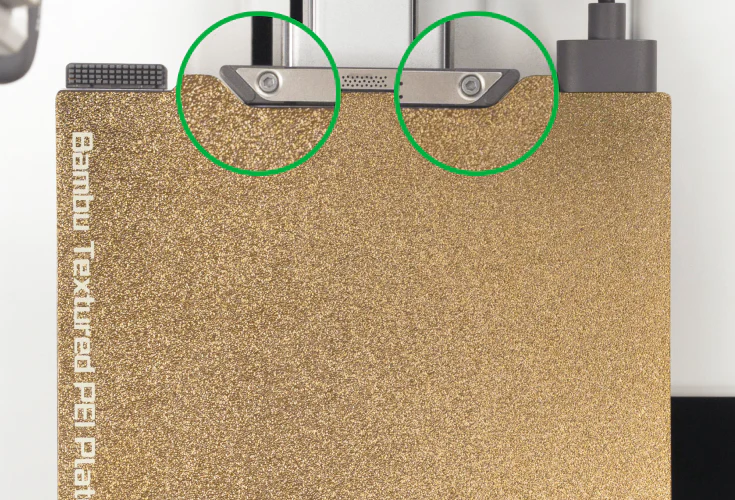
Step 1: Align the board with the fixed points on the platform, ensuring the name of the board faces you.
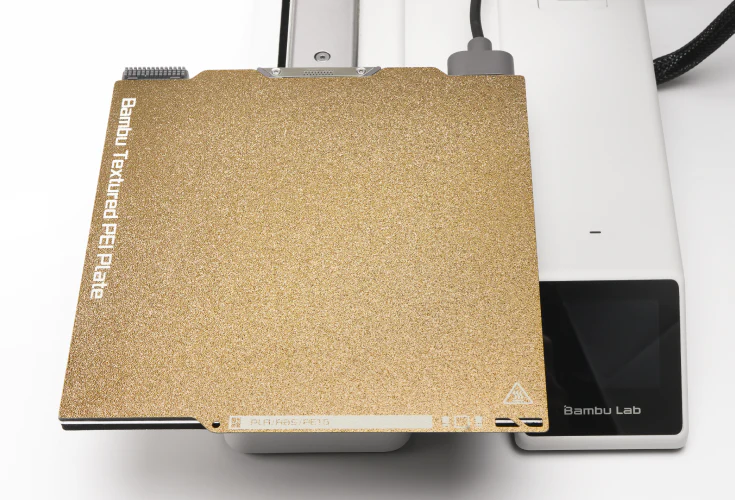
Step 2: Lower the height of the board and secure it to the magnetic platform.
Recommended settings - A1 Mini
| Materials | Heated Bed Temperature | Is adhesive required? |
| PLA/PLA-CF/PLA-GF | 45~60℃ | Not Necessary |
| PETG/PETG-CF | 60~80℃ | Necessary |
| TPU | 35~45℃ | Necessary |
| PVA | 45~60℃ | Necessary |
Please note that adjustments to other slicing software settings may be necessary depending on the model and material requirements.
Notes
Automatic flow rate calibration on textured PEI boards is effective in most cases (OTA version 01.06.01.00 or higher), but is not as reliable as other boards.
Please regularly clean the surface with detergent and water to remove any dust or grease residues. If ineffective, you can use alcohol to clean the surface.
Do not use acetone to clean textured PEI, as it will damage the PEI surface.
Always wait a few minutes for the board to cool before removing the printed model to facilitate easy removal. This prevents damage to the board and ensures the long-term lifespan of the product.
Textured PEI boards are considered consumables and will degrade over time. The warranty only covers manufacturing defects and does not include cosmetic damage such as scratches, dents, or cracks. Only boards that are defective upon arrival are covered by the warranty.